

More about: 10 Things to Do in Seville in Winter
There is no better time than any other to visit a city. Each season has its advantages and its audience. For example, winter is the ideal season for those who want to experience everything Seville has to offer while escaping the heat and crowds. It is a season where the cold is not an impediment and there is no shortage of plans and ideas for discovering another side of this Andalusian city.
During the winter months, there are also festivals and events that are celebrated with special enthusiasm in the city, as well as, of course, its best monuments and places, seen from the perspective of the calm that characterises Seville in winter.
1. A visit to Seville Cathedral and the Alcázar is a must, with fewer tourists than at other times of the year

Visiting the cathedral and the Alcázar of Seville is the first thing you should do when you arrive in the city. Although it may sound like a typical plan and can be done throughout the year, the truth is that seeing this monumental complex in winter has a great advantage. There are far fewer people than during the rest of the year.
If you book your ticket for Seville Cathedral or the Alcázar in advance, you can see all the wonders of these places without queuing. Bear in mind that both monuments receive more than 2 million visitors a year.
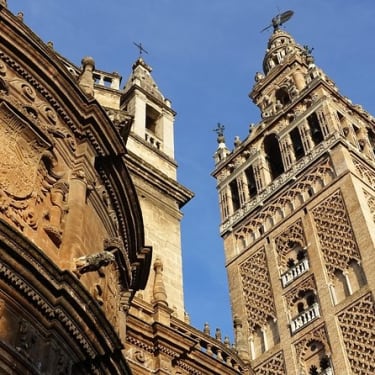
Seville Cathedral is not just any cathedral, but the largest Gothic cathedral in the world, and the Alcázar is the oldest royal residence in Europe still in use. In addition, both monuments are World Heritage Sites.
2. January is the month of flamenco fashion

Flamenco lovers travelling to Seville in January will find a date marked in red on the calendar. For more than a decade, the first month of the year has been celebrated with We Love Flamenco, an event focused on flamenco fashion where the best artisans and manufacturers showcase the finest dresses on catwalks held in different locations around the city.
This event serves as a prelude to the famous April fair, and to mark the occasion there are also special flamenco shows and performances, with the Triana neighbourhood, as usual, providing the backdrop and cradle of this distinctive musical genre.
Whether you like fashion or are attracted to music, this event is the best attraction in winter.
3. Take a gastronomic tour to warm up

Gastronomy is one of Seville's strong points, and never has this been more true. It is true that winter is not particularly cold in the city, but the humidity of the Guadalquivir and some colder days make eating good hot dishes very welcome.
And for this we can take a gastronomic tour of the city and try some of its winter delicacies:
- Andalusian stew, similar to Madrid stew but with certain distinctive features.
- Huevos a la flamenca, a dish featuring fried eggs, usually served on a bed of fried tomato and some vegetables or sausages on a hot plate.
- Roasted chestnuts, sold at street stalls.
- Churros with chocolate for breakfast.
- Oxtail stews, a real delicacy for winter.
4. Take shelter from the cold in its museums
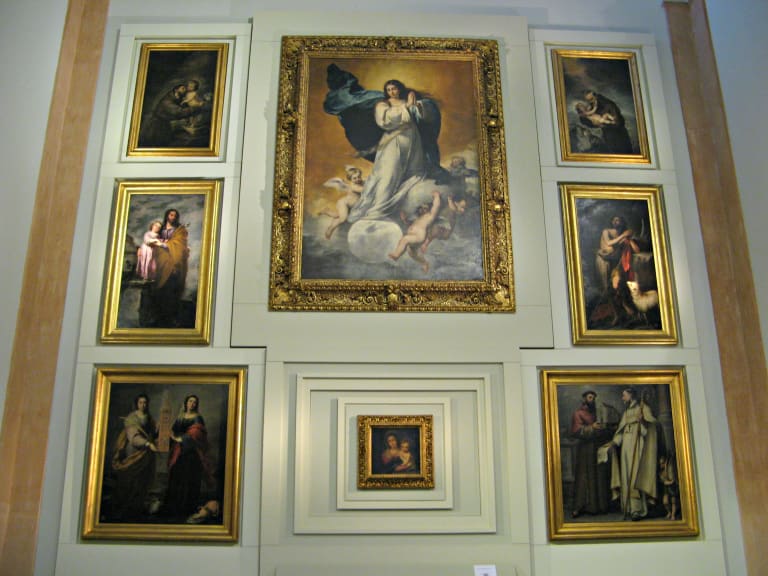
Whenever you visit a European city in winter, it's a good idea to have a plan in case you encounter one or more days of excessive cold. In these cases, I usually recommend visiting museums if the city in question has an interesting range. Fortunately, this is the case in Seville. There are several museums in Seville, some of which are unique in the world.
This is the case of the Flamenco Dance Museum, unique in its theme and one of the most important in the city. It is located in the Santa Cruz neighbourhood, between the Plaza de la Alfalfa and the Cathedral, and also has a performance hall where concerts are regularly held. You can find more information in this post.
Other alternatives are the Museum of Fine Arts in the Plaza del Museo, or the Maritime Museum, located in the famous Torre del Oro. All of these are excellent places to visit on cold days.
5. Join in the activities on Andalusia Day

28th February is a very special date for the city of Seville and for Andalusia. On this date, Andalusia Day is celebrated and it is one of the most special days to visit the capital of this region, as the city is decked out and prepares to host numerous activities and events.
Museums and archaeological sites play a leading role in the activities on this day. Booking an excursion to Italica from Seville is an excellent idea, as theatre performances are held in the ruins of this ancient Roman city to mark the occasion.
Apart from the official programme of activities, I highly recommend this date for immersing yourself in Sevillian customs. This includes, for example, booking a boat trip on the Guadalquivir River, booking a tapas and flamenco tour of Seville, or visiting the most emblematic places in Seville with a private tour. Any excuse is a good excuse to soak up the spirit of Seville, but on Andalusia Day it's easier.
6. Experience Christmas in Seville

In any European city, Christmas is the main event of the winter. Seville is no exception. These festivities are celebrated in Seville with great enthusiasm and a strong sense of tradition. Christmas markets, street lighting, Christmas sweets and carol singing competitions are all classic features of Christmas in Seville.
One of the favourite activities for Sevillians is to follow the famous nativity scene route. This is an itinerary around the city's churches, which set up their own nativity scenes with exquisite craftsmanship. In any case, if you want to find out everything that Christmas in Seville has to offer, you can do so at this link.
And if you want to admire the Christmas lights that adorn the capital of Seville, there is nothing better than booking a seat on the tourist bus, from which you can comfortably and warmly contemplate Seville's most representative monuments decorated for Christmas.
7. Celebrate the Feast of the Immaculate Conception

Religious festivals are celebrated with particular enthusiasm in Seville. Proof of this is its famous Holy Week. But it is not the only date marked on the calendar in this regard. Another very special day for the city is 8 December, when the Feast of the Immaculate Conception is celebrated. This date is associated with many activities and traditions.
The Dance of the Seises is a traditional dance performed by a group of children in Seville Cathedral, which can be enjoyed free of charge from 8 to 15 December.
There are also special celebrations in the Cathedral and even university music groups play in several central squares around the city. But without a doubt, the highlight is the procession that carries the Virgin through the streets of Seville, which always attracts thousands of tourists.
8. Sports season in the Andalusian city

Given that winter temperatures in Seville are very mild and spring and summer temperatures are very high, this is a great time to enjoy outdoor sports. In fact, there are several important events during these months, such as the Seville Half Marathon and Marathon.
The Seville Half Marathon serves as a warm-up for the full marathon. It is held at the end of January and has both a full 21-kilometre version and a shorter 10-kilometre version. Both circuits pass through some of the city's most emblematic places.
A few days later, in February, the main event, the marathon, takes place. It is twice as long and has twice as much international recognition.
9. Enjoy the carnivals
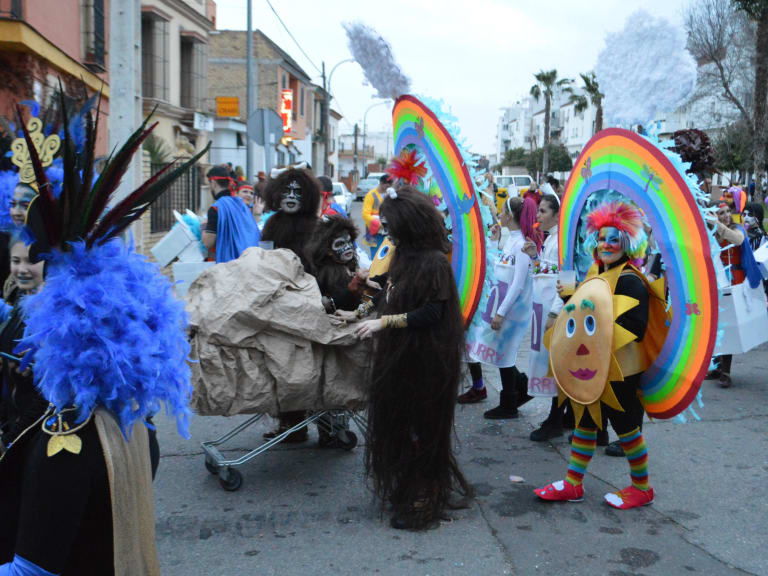
One of the most celebrated festivals in winter is carnival. In Andalusia, the carnival in Cadiz is the most famous and recognised worldwide, but the one in Seville is also worth seeing, especially because it shares many things with the one in Cadiz.
In fact, some of the groups and chirigotas (satirical singing groups) from Cadiz travel to Seville after the Cadiz carnival. Some of these groups join in the festivities in neighbourhoods such as Triana or in towns near Seville, such as Carmona.
In Seville, a festival is held in early or mid-March in which the groups and chirigotas perform several shows with the characteristic Andalusian humour as the predominant theme. This festival is held at the Cartuja Centre Cite in Seville. A very fun plan for the Sevillian winter.
10. Have a great time at a winter theme park: Seville On Ice

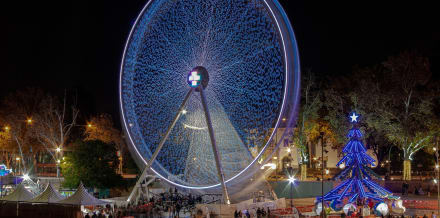
With the arrival of winter and Christmas, a winter amusement park is set up in Seville, Sevilla On Ice, a park that is installed every winter at the Muelle de las Delicias, next to the Guadalquivir River, and is the best place to enjoy winter, especially if you are travelling to Seville with children.
The park's main attraction is Spain's largest outdoor ice rink, accompanied by a dozen other attractions such as an ice slide, Ferris wheels, bouncy castles, etc.
There are also food courts and all kinds of entertainment to have a great time despite the cold. The park is usually open from the end of November to mid-January.
Temperatures in Seville in winter

If you are looking for a European city to visit in winter where the cold is not a problem, Seville is the place to go, as it is one of the warmest cities on the continent.
The average temperature is around 12 degrees, with highs of over 15 degrees and lows that rarely drop below 5 or 6 degrees. Of the winter months, January is the coldest, but not much below these temperatures.
In addition to being a mild winter, the advantage is that rainfall is not very common. Despite being the rainiest season, on average it does not exceed 5 or 6 days per month. If there is one drawback, it would be the humidity of the Guadalquivir River, which can sometimes make the temperature feel colder. But, as you can see, Seville is the ideal destination for those who feel the cold.
Tourist numbers and prices in Seville in winter

This section highlights another of the great advantages of visiting Seville in winter. This is the time of year when there are fewer tourists in the city and, therefore, fewer crowds and greater comfort when visiting its monuments.
Finding accommodation during these months is quite easy. The only uptick is at Christmas, when people take advantage of the holidays to see the city decked out in its festive finery.
Prices also drop considerably due to low demand. It is not an overly expensive city, but if you are looking to save money on your trip, it is best to choose months such as February. In any case, Seville in winter is very appealing to visit. Far from the heat and crowds, and with lower prices.
What to pack in your suitcase for a visit to Seville in winter

Another advantage of travelling to Seville in winter is when you pack your suitcase. Normally, when travelling to a European city in winter, space is often a problem due to the amount of warm clothing you need to pack. This is not the case here.
To travel to Seville, all you need is a light coat and some light winter clothing such as jumpers. Although it doesn't usually rain, a raincoat never goes amiss, and the most important thing is to wear comfortable shoes for walking around the city, as it is ideal for visiting on foot.