

More about: Things to Do in Krakow in 3 Days
History, architecture, gastronomy, culture... Three days in Krakow will give you time to enjoy all of this and also take one of the most popular (and also most difficult) excursions from the Polish city: a visit to the Auschwitz concentration camp.
Day 1: Discover the old town

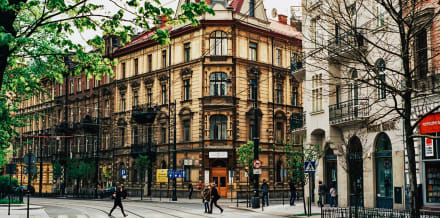
Krakow is a charming city and most of its attractions are located in the old town. On your first day, you can spend your time exploring the Stare Miasto district, a medieval gem that is easy to get around on foot.
Start the day with a spectacular breakfast
Before exploring Krakow, you need to recharge your batteries. To start the day with energy, I recommend:
- Café Botánica: This bar is located at 9 Bracka Street and specialises in the first meal of the day. Another strong point is the atmosphere of the place: inside, the red brick walls and plants contribute to creating a very relaxing environment.
- Wesola Cafe (17 Rakowicka Street), a place run by enthusiasts of the precious dark liquid. Their espressos are made with double the amount of ground coffee. Not bad, right?
- Milkbar Tomasza (24 Sw. Tomasza Street).
- Camelot (17 Sw. Tomasza Street).
Explore the Market Square
The Market Square (Rynek Glówny) is the heart of Krakow and a place you will get to know in detail if you book a guided tour of the old town. This huge space is dominated by the majestic Cloth Hall (Sukiennice), a Renaissance-style building that housed merchants who traded in textiles. Strolling under its arches, you can buy a few souvenirs at very competitive prices.
At this point, don't miss a guided tour of the Rynek underground museum, located four metres below the square and the youngest museum in Krakow. Its touch screens and holograms take us back to the past, when the square had not even been laid out. The virtual reality experience is flanked by traditional archaeological finds and the remains of an 11th-century cemetery. Due to its popularity and limited capacity, it is advisable to book a guided tour of the Rynek underground museum in advance.
For more information about this first stage, I recommend reading the post on what to see and do in Krakow's market square.
Enter the nearby St. Mary's Basilica

Next, I recommend booking a guided tour of Krakow. Most tours will give you the opportunity to admire St. Mary's Basilica, which has two towers of different heights. Legend has it that during the reign of Duke Boleslaw the Modest, it was decided to add two towers to the church, and the task was entrusted to two brothers. When the younger brother realised that his tower was lower, he killed his brother out of envy. However, he was tormented by remorse and on the day the church was to be consecrated, he committed suicide with the same knife.
Once inside, you can appreciate the three main attractions of St. Mary's Basilica: the blue ceiling, the splendid stained glass windows and the wooden altarpiece by German artist Veit Stoss depicting the Virgin Mary among the apostles. You can usually enter without paying, but you will have to use a side entrance. If you are interested in religious tourism, you can read the article on the 10 churches in Krakow that you must visit.
Climb Wawel Hill
Once you have finished your visit to the basilica, you can take a short walk south. In just over ten minutes, you will reach the foot of a limestone rock that rises above the Vistula River. At its summit stand two symbols of the city: the castle and the cathedral.
In the 16th century, King Sigismund I the Old summoned the best Polish and foreign artists to his court, and little by little they carved out this magnificent Renaissance castle that we can see today. To learn more about this architectural gem, I recommend booking a guided tour of Wawel Castle, which houses some very interesting permanent exhibitions:
- The royal apartments, a collection of tapestries, portraits of kings and princesses, furniture and paintings by Italian and Dutch artists
- The royal apartments
- The Crown Treasury and Armoury, which brings together insignia, jewels, weapons and armour
- The exhibition of Oriental art with banners, weapons, Turkish and Persian carpets, and a few ceramic objects from China and Japan.
A few metres away stands Wawel Cathedral, the former coronation site of Polish kings. Once inside, you can admire the mausoleum of St. Stanislaus, the patron saint of Poland who was murdered by King Bolesław himself. Thanks to this burial site, Wawel Cathedral is the most important place of worship in the entire country. For more information, see the post Visiting Krakow Castle: opening hours, how to get there, guided tours and more.
Return to your hotel and get ready for dinner

After your first foray, it's time to return to your accommodation for some well-deserved rest. If you want to get there comfortably and get around Krakow during your stay, be sure to buy the Krakow Card with a pass for museums and transport.
Once you're back at the hotel and have had a little rest, you'll be ready to go out for dinner. One of the most popular restaurants in Krakow is Trzy Gęsi, where you can try traditional recipes with a modern twist.
My recommendation is to choose a tasting menu to begin a culinary journey guided by their experienced chefs. The restaurant is located at 7 Kupa Street and is open from 5 p.m. to 11 p.m. (Tuesday–Saturday) and from 1 p.m. to 8 p.m. (Sunday). It is advisable to book well in advance.
End your first day at a bar with live music
Do you love jazz? If the answer is "yes," you absolutely must visit Piano Rouge. Located in the heart of the city (46 Rynek Glowny Street), this jazz bar is characterised by its burlesque atmosphere with red lights, feather boas and velvet cushions. Live music is played every night from 9 p.m. and while you enjoy the show, you can have a cocktail or a glass of wine.
On the other hand, if you fancy something more lively, head to Kazimierz. The Jewish quarter is the most festive area of the city and on Estery Street you will find a bar that has become a real institution: Alchemia. It owes its name to the alchemists' tools used as decoration and is famous for its music. In its lounge, you can listen to jazz and rock by renowned artists and local bands.
And if, on the other hand, you are looking for something more popular, book tickets for a folk show in Krakow, where you can enjoy a performance by a folk group in a typical venue.
Day 2: Take a spine-chilling tour

Thousands of tourists travel to Krakow to visit a place that everyone knows and that leaves no one indifferent: Auschwitz. Everyone should cross its threshold at least once in their lifetime so as not to forget this sad page in history.
Spend half a day at the Auschwitz-Birkenau concentration camp
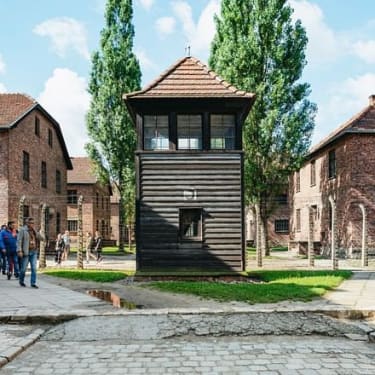
A weekend in Krakow will give you the opportunity to visit an iconic place in contemporary history: the Auschwitz-Birkenau concentration camp, a symbol of the terror and genocide perpetrated against Jews, Gypsies and homosexuals. It is not an easy excursion, but sometimes you have to make an effort to see the horrors of war first-hand.
The concentration camp is located in Oświęcim, a town 60 km from Krakow. To get there, you can choose between bus, train or car. However, to understand the historical significance of the place and learn about the stories of its prisoners, it is preferable to book an excursion, especially if you are travelling to Poland during the high season (April to October). Here are several options:
- Excursion to Auschwitz from Krakow, from RM137
- Excursion to Auschwitz and the Wieliczka Salt Mines from Krakow, from RM558
- Excursion to the Wieliczka Salt Mines and Auschwitz-Birkenau from Krakow, from RM590
- Excursion to the Auschwitz-Birkenau Memorial and Museum from Krakow, from RM257
- Excursion to Auschwitz-Birkenau from Krakow, from 257
In the article Excursions to Auschwitz from Krakow, you will find practical information to help you choose a tour. In the list below, I provide some useful information for your visit. I also recommend that you read the post 10 Tips for visiting Auschwitz from Krakow.
Try zapiekanka in Plac Nowy

When you return to Krakow, you can try a typical Polish food: zapiekanka, half a baguette with mushrooms, ham, cheese and vegetables. It is the Polish equivalent of pizza and its name derives from the local term for baking. While it used to be a cheap meal for students and workers, today there are more refined versions that appeal to the most discerning palates.
In the city, Endzior is the most sought-after bar. The establishment is located in the heart of the Kazimierz district (Plac Nowy 4) and is known for its quality/price ratio and generous portions. You'll usually have to queue a little to get your baguette. And after this snack, don't hesitate to book an open-bar pub crawl.
End the day at a spa
After such a physically and emotionally demanding day, you can realign your soul at a spa in the city centre. In Krakow, there is a unique place that combines two highly appreciated elements: relaxing treatments and beer. The establishment is called Beernarium Piwne Spa and is located at 13 Floriańska Street, just two minutes from the Market Square. Here you can literally bathe in beer, whose ingredients rejuvenate your skin.
As a bonus, this original experience takes place in a wooden tub. At the end of the treatment, you can sample a local beer. And if you want to learn more about Polish beers, be sure to book a beer tour.
Day 3: Discover the communist side of Krakow

In Poland, as in other countries behind the Iron Curtain, communism had a major impact on the lives of citizens. In Krakow, the Soviet legacy is particularly evident in Nowa Huta, a neighbourhood a few kilometres from the old town that is not to be missed. To learn more about it, you can book a tour of the Nowa Huta neighbourhood.
Relive Krakow's Soviet past
Nowa Huta was an ideal city conceived by Stalin. Its main features are the wide avenues that radiate out from a central square in the shape of a star. Other points of interest are the nuclear bunkers and the Church of Our Lady Queen of Poland. Also known as Arka Pana, this place of worship sparked a standoff between the inhabitants of Nowa Huta and the communist authorities, who did not want religious buildings in their ideal neighbourhood.
After the fall of the Soviet Union, the streets were renamed: the former Lenin Street is now Solidarity Avenue, while the square dedicated to Stalin has become Ronald Reagan Square. Curious, isn't it? However, the appearance of the city remains the same, and if you book a tour of communism in Krakow, you will discover some interesting anecdotes.
Explore the Kazimierz district

Once back in Krakow, you can take a stroll through the city's youngest and liveliest neighbourhood: Kazimierz! Today, it is a favourite spot for hipsters who frequent its stylish cafés and art galleries. However, this was not always the case. From the 14th century until the early 19th century, these streets were home exclusively to Jews who, despite being restricted to living in this area, enjoyed certain privileges: they governed themselves and only the king could exercise authority over them.
Everything changed during the Second World War. With the arrival of the Germans, the neighbourhood suffered extensive devastation. Unfortunately, the situation remained the same during the communist era, and it was only in the 1990s that things changed.
If you book a tour of the Jewish quarter, you will visit the Temple Synagogue, the Jewish Museum of Galicia and the Church of Skałka. The latter hides a macabre anecdote: in the 11th century, Bishop Stanisław of Szczepanów was murdered and then dismembered by King Bolesław the Daring over a territorial dispute. If you want to delve deeper into this area of the city, I recommend the post What to see and do in Krakow's Jewish quarter.
End your long weekend with a special dinner
To say goodbye to Krakow, there is nothing better than booking a gastronomic tour of the Jewish quarter or enjoying a nice dinner in a warm and cosy restaurant such as Morskie Oko, which fits the bill perfectly. The establishment is located on the ground floor of an Art Nouveau building at number 8 Szczepański Square.
The restaurant stands out for its rustic charm, wooden beams and fireplace, which fills the rooms with the pleasant smell of burning wood. It is the ideal place to try regional Polish cuisine, especially if you visit Krakow in winter. The establishment owes its name to the lake of the same name in the Tatra Mountains and means "the eye of the sea" because in the past it was believed that an underground tunnel connected it to the Baltic Sea.
If you are interested in local cuisine, I recommend reading the post on the 10 best restaurants in Krakow.